
How to pitch UGC to clients: a performance agency’s playbook
Have you ever watched a low-budget iPhone video outperform a polished, expensive studio shoot in your client's ad account? It happens more often than most agencies want to admit.
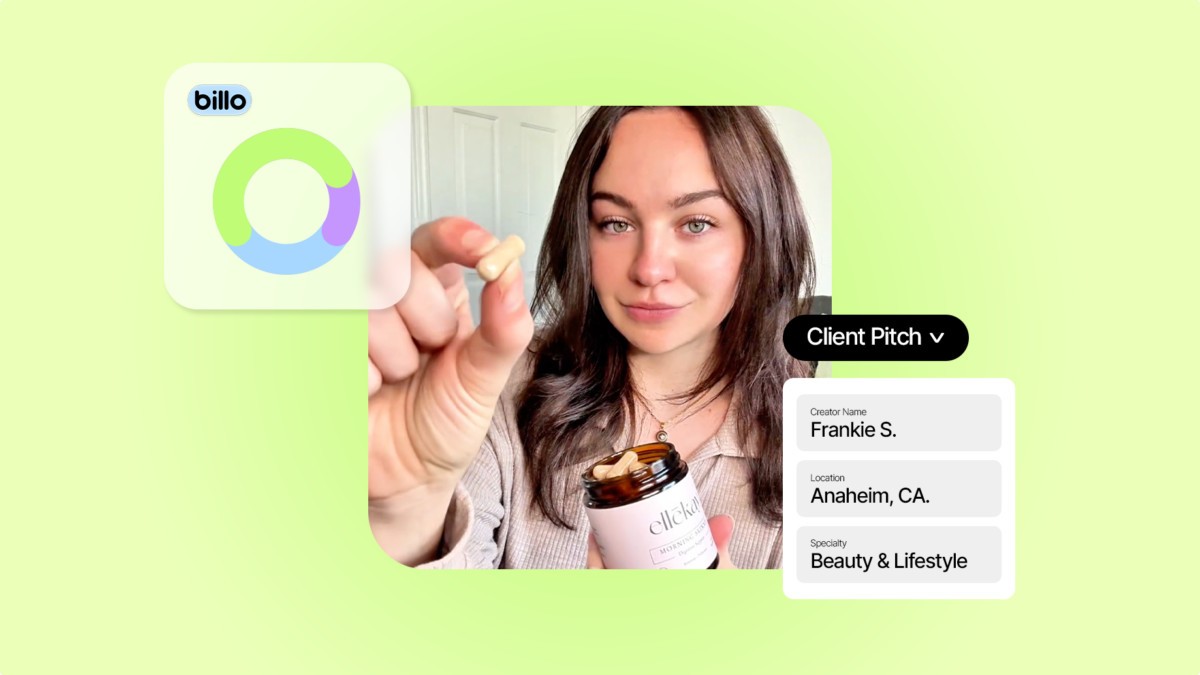
Have you ever watched a low-budget iPhone video outperform a polished, expensive studio shoot in your client’s ad account? It happens more often than most agencies want to admit, and it points to something important: the rules for what makes a great ad have fundamentally shifted.
Your clients’ brand teams still think in terms of production quality. You know the real lever is creative volume, authenticity, and speed of iteration. The challenge is bridging that gap — and doing it in a way that moves a skeptical CMO from “we don’t do UGC” to “when can we start?”
Frame UGC as a performance investment
When a CMO hears “UGC,” they often hear “cheaper content.” That framing almost always kills the pitch. What CMOs actually care about is CAC, ROAS, and how efficiently their media budget converts, so those are the terms your pitch needs to speak.
The trust gap between branded content and creator content is significant. 60% of consumers consider UGC the most authentic form of content, while only 16% say the same about branded content. That ratio matters to a performance-focused client because trust is the input to conversion. On the marketer side, 93% of marketers who have used UGC say it outperforms traditional branded content, particularly on cost efficiency.
The production economics shift significantly. You can produce 10 to 15 pieces of creator content for the cost of a single polished studio shoot, which means more creative variants, more testing data, and faster winners from the same budget. That reframe — from “we’re spending less on production” to “we’re now able to test more angles” — tends to land well with performance-minded clients.
If your client is running 3–5 studio ad variants per quarter, they are spending weeks on production and testing a fraction of the creative angles they need. With a UGC approach, that same quarterly budget could cover 20 or more variants across different hooks, messaging angles, and audience personas. The client gets more signal, faster, at a lower cost per asset.
The pitch comes down to one reframe: algorithm data shows creative quality drives about 70% of campaign performance, which means creative volume and iteration speed are no longer optional. They are the mechanism through which performance media works.
The data points that close the room
Once you’ve reframed the conversation, the next step is giving clients the specific numbers that back the shift. Let’s say your client is a mid-sized ecommerce brand currently testing 5–8 creatives per month. With a UGC model, the same budget could support 20 or more test variants. The algorithm finds winners faster, your team collects more data on what messaging resonates, and the client’s ROAS compounds over time as losers get cut and winners get scaled.
Handling the “our brand guidelines are too strict” objection
Brand guidelines and UGC can coexist. The answer is a controlled creator system: clear do’s and don’ts, product-truth scripts, legal usage rights, and a review loop that still ships volume. Clients keep brand safety. You keep testing speed.
Final thoughts
TikTok advertising in 2026 is becoming increasingly driven by creativity, authenticity, and continuous optimization. Brands that embrace AI-assisted production, creator partnerships, social commerce, interactive experiences, and data-driven optimization will be better positioned to capture attention and convert audiences.
Rather than thinking of TikTok as simply another advertising channel, marketers should approach it as a content-first ecosystem where entertainment, community, and commerce work together. The brands that succeed will be those that continuously learn from user behavior, experiment with new creative formats, and adapt quickly to platform changes.